
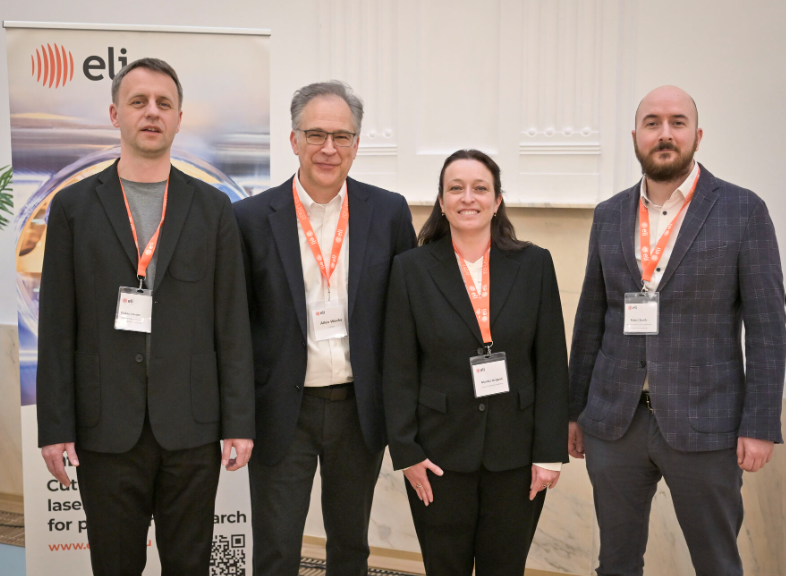
Slovakia and Montenegro have joined the Extreme Light Infrastructure ERIC (ELI) as observers; this accession expands ELI’s membership base and observer group and strengthens its role as a platform connecting national research communities with large laser facilities across Europe. As observers, both countries will participate in the governance of ELI and contribute to the development of its scientific and strategic direction.
Slovakia’s accession formalizes a process that has been underway since 2021 and was supported by coordinated efforts from Slovak research institutions and the government. Consequently, Slovak researchers have an open path to participating in ELI’s scientific programs and governance. Slovakia has also strengthened its national coordination and established a specialized unit for research infrastructures within the ministry to support engagement in European initiatives.
Slovakia will focus primarily on linking its technical expertise in optics, photonics, and materials science with ELI’s experimental platforms. Slovak researchers are already actively involved in the ELI user program, where they have submitted proposals and the first experiments are underway. Planned investments will focus on complementary technologies, including sample preparation, surface analysis, and advanced materials characterization, thereby positioning Slovak facilities as specialized partners within the broader infrastructure.
Future cooperation will focus on advanced materials, photonics, and laser applications, as well as participation in experimental programs. Observer status also grants Slovakia access to ELI’s governing bodies, including discussions at the advisory and committee levels, thereby strengthening its role in shaping the future development of the infrastructure.
Context
ELI is a world-leading research infrastructure based on laser technology. It supports cutting-edge research in physics, chemistry, materials science, and medicine, as well as groundbreaking technological innovations. This infrastructure provides researchers from the European Research Area with enormous opportunities across a wide range of scientific disciplines. It also offers immediate access to the most intense and shortest-pulsed lasers in the world.
Published on April 8, 2026, slord