
On 17 June 2025, the V4 R&I Liaison Offices in Brussels, together with the National Science Centre Poland, convened key voices from across Europe to discuss how social sciences and humanities (SSH) can shape a fair, inclusive green transition. From EU policymakers to V4-region researchers, participants explored how Horizon Europe partnerships and evidence-based policymaking can ensure that no one is left behind in Europe’s climate transformation. Dive into the full event summary and find out how the upcoming European Partnership on Social Transformations and Resilience plans to bridge innovation and social impact.
The 2025 edition of the annual V4 R&I Liaison Offices conference, titled “Towards a Fair Green Transition: Harnessing Research & Innovation for Social Impact”, explored the role of Social Sciences and Humanities (SSH) in guiding Europe’s green transition. The event reflected the ambitions of the upcoming candidate European Partnership for Social Transformations and Resilience (STR) and brought together EU officials, national policymakers, SSH researchers, and science diplomacy representatives from Central and Eastern Europe and beyond.
The conference offered an inclusive platform to debate how SSH-driven research and innovation can support the just, inclusive, and resilient transformation Europe needs in the face of climate change and societal disruption.
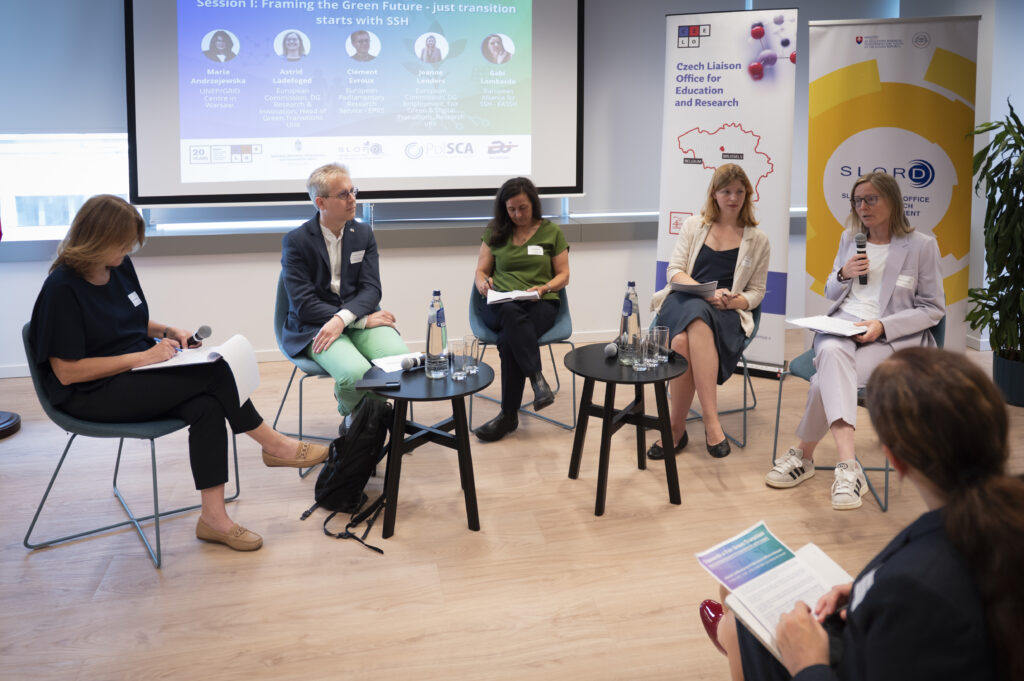
Session I: Framing the Green Future – Just Transition Starts with SSH
This opening session focused on the value of embedding SSH in European R&I frameworks to ensure that the green transition is socially inclusive and equitable.
Speakers: – Astrid Ladefoged (European Commission, DG R&I) – Jeanne Lenders (European Commission, DG Employment) – Clément Evroux (European Parliamentary Research Service) – Gabi Lombardo (European Alliance for SSH – EASSH)
Moderator: Maria Andrzejewska (UNEP/GRID, Warsaw)
Key Points:
Europe is accelerating its green transformation, yet it is increasingly evident that technological innovation alone is insufficient. The green transition constitutes a profoundly social process. At stake is not only the restructuring of energy systems and economies, but equally the transformation of societies in ways that are fair, inclusive, and democratic. Astrid Ladefoged cited the data that less than 50% of the EU citizens believe the society is fair, thus there is huge need for addressing this issue. Also, as pointed out by Jeanne Lenders, we have to think more broadly about the changes in the job market with the advent of green transition, as the so-called green jobs are not only the ones linked with transportation and energy production. On the other hand, the EU must not forget its need for innovation, that could be driven in a larger scale by innovation financed by the private sector – as mentioned by Clement Evroux. Yet, the main focus of the panel remained the critical role of the Social Sciences and Humanities (SSH) – disciplines that provide insights into human behaviour, culture, institutions, and social systems – in advancing a just and sustainable transition. SSH are indispensable for shaping inclusive, participatory, and resilient policy frameworks, particularly in light of the existing disconnect between political ambition and public perception. In light of this, it is essential that the upcoming Framework Programme (FP10) explicitly integrates Social Sciences and Humanities (SSH) as a core component, ensuring these disciplines have a substantial and strategic role in shaping policies that foster a fair, inclusive, and socially grounded green transition.
Finally, the panelists also mentioned the forthcoming European Partnership on Social Transformations and Resilience (STR), to be launched under the Horizon Europe Strategic Plan 2025–2027, which aims to address these challenges and offer actionable solutions.
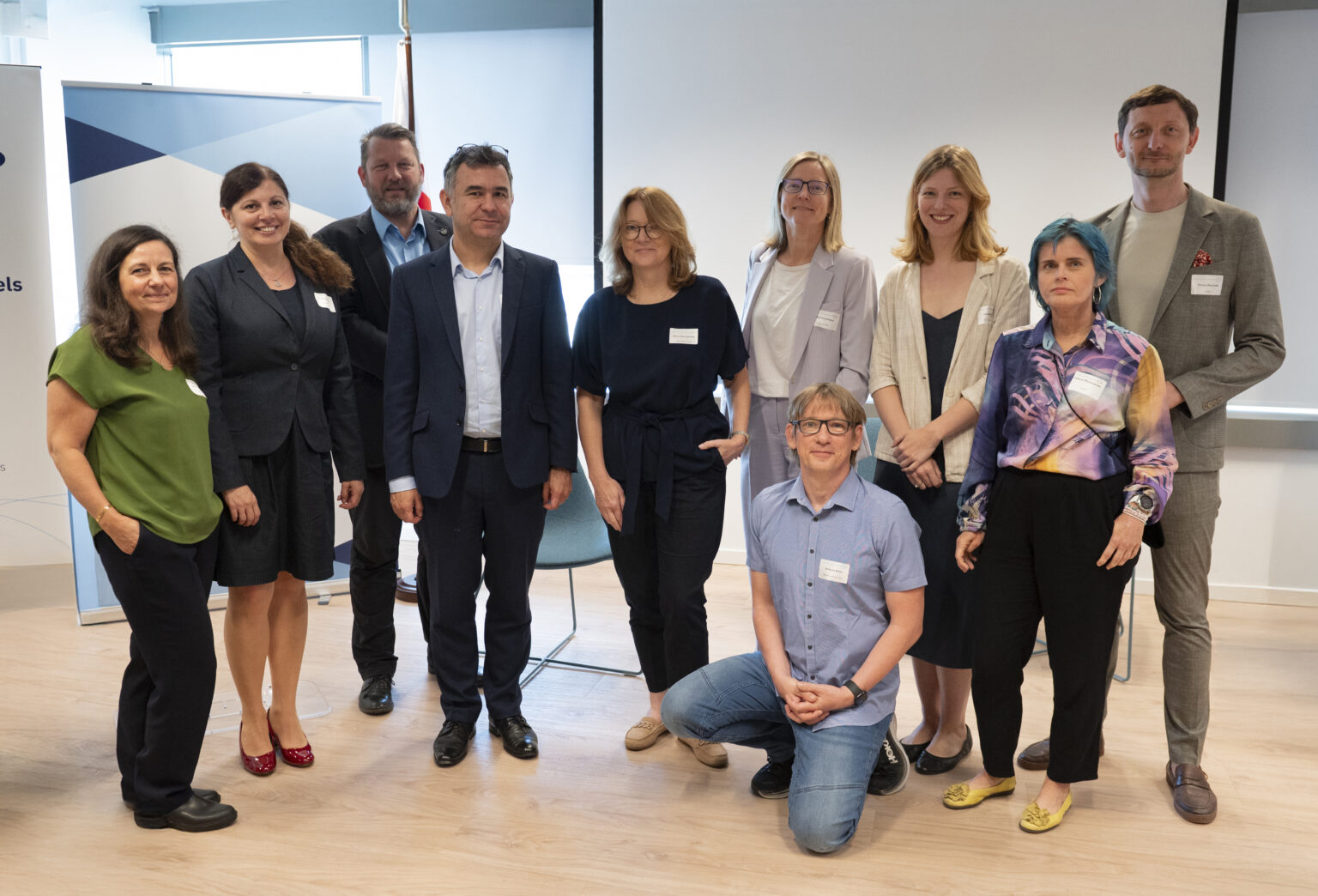
Session II: Understanding the Complexity of the Green Transition – Empowering the Change
Researchers from V4 countries provided empirical insights into public attitudes toward climate change and the social dimensions of transformation.
Presenters: – Dr. Michał Kotnarowski (Institute of Philosophy and Sociology, Polish Academy of Sciences) – Prof. Bohuslav Binka (Masaryk University, Czech Republic) – Prof. Júraj Buzalka (Comenius University, Slovakia) – Dr. Barbara Hegyi (Eötvös Loránd University, Hungary)
Moderator: Maria Andrzejewska (UNEP/GRID, Warsaw)
Key Points: All the presenters addressed the ways in which SSH can study society’s attitudes towards green transition, for example, shedding light on its impact in rural areas Juraj Buzalka) or on efforts to truly incorporate sustainability education of future entrepreneurs (Barbara Hegyi). It was brought up by Michał Kotnarowski that public support for climate action exists, but expectations for equitable cost-sharing are strong. What is also an important aspect of climate actions are human values and emotions that come into play and how attitudes towards green issues change within societies (Bohuslav Binka).
The discussion that followed the presentations emphasized that the EU narratives must be tailored to resonate with citizens’ values such as security and identity, as their resistance to change often stems from social marginalisation and a lack of inclusive messaging.
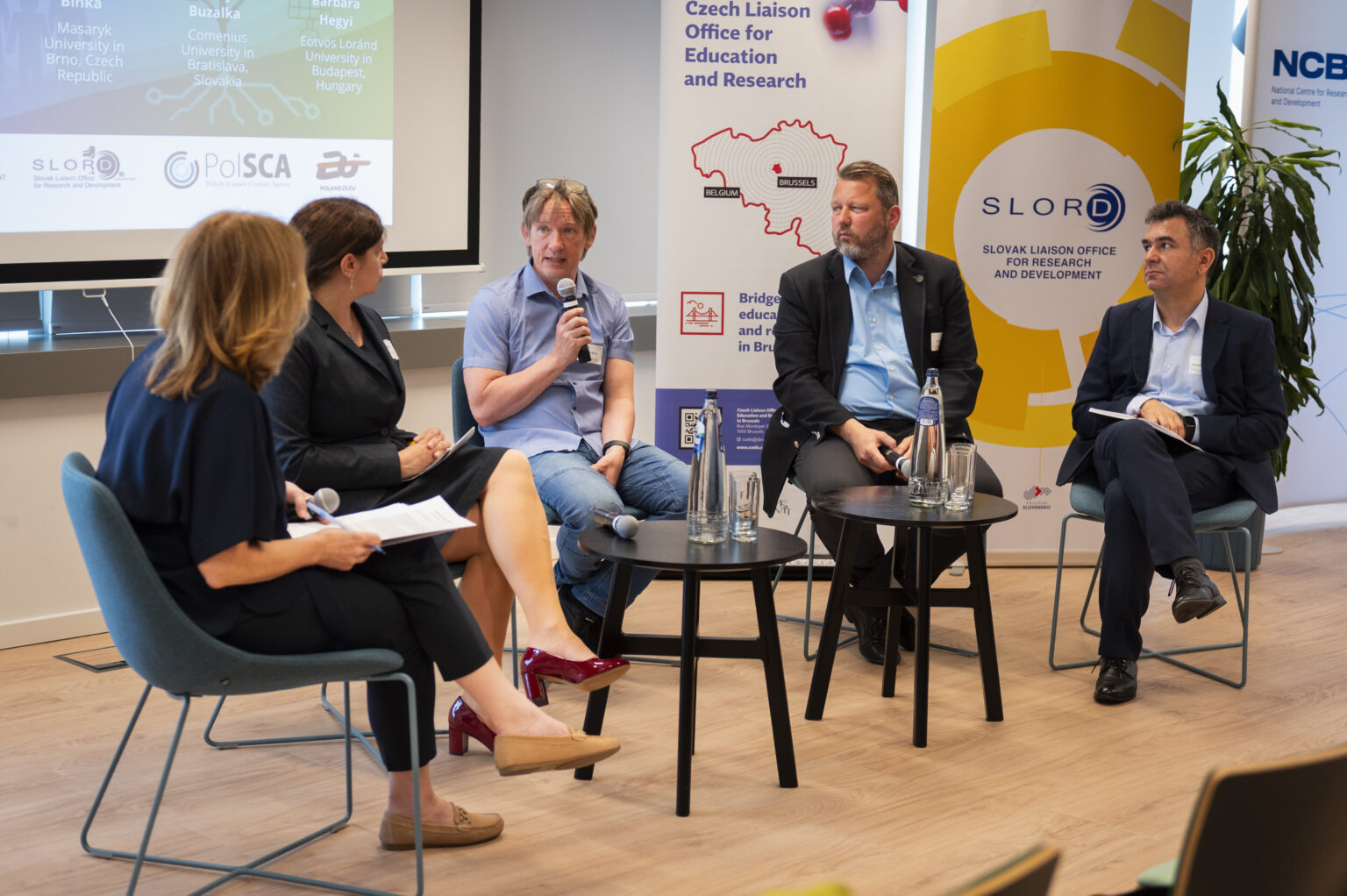
Session III: Aligning Strategies – Translating EU Policies into National Actions through HE Partnerships
This panel addressed how Horizon Europe Partnerships can help align national and EU strategies, with a focus on inclusive governance and strategic coordination in CEE countries.
Opening Speech: Barbara Świątkowska (National Science Centre, Social Transitions and Resilience Coordinator)
Panelists: – Táňa Hálová Perglová (Technology Agency of the Czech Republic – TACR, Czech Republic) – Borbála Schenk (National Research, Development and Innovation Office – NRDIO, Hungary) – Julia Rosend (Ministry of Education and Research, Estonia) – Jürgen Kroseberg (Federal Ministry of Research and Education, Germany)
Moderator: Maria Śmietanka (National Centre for Research and Development – NCBR, Poland)
Key Points: Barbara Świątkowska from National Science Centre in Poland presented the Social Transitions and Resilience Partnership, coordinated by NCN, as a pioneering initiative with a focus on fairness, resilience, and inclusiveness. The key areas for the STR include social protection, future of work, education and skills, and the just transition to climate neutrality. It is planned that the STR will implement six calls from 2027–2034, promoting cross-country collaboration, open science, and policy relevance.
The panel discussion on translation of the EU policies at national levels featured examples from Germany, Estonia, Hungary and Czech Republic and the respective actions aimed at the policy alignment were different, reflecting the country-specific conditions – with highly decentralized ones in Germany and relatively consolidated in Estonia and Hungary. The panelists agreed that national coordination mechanisms are crucial to the success of European Partnerships. Representatives of Czech Republic and Hungary shared their experiences with attracting researchers from both countries to engage in the HE partnership projects. Thus, CEE countries can lead to creating adaptable models that streamline EU policy implementation.
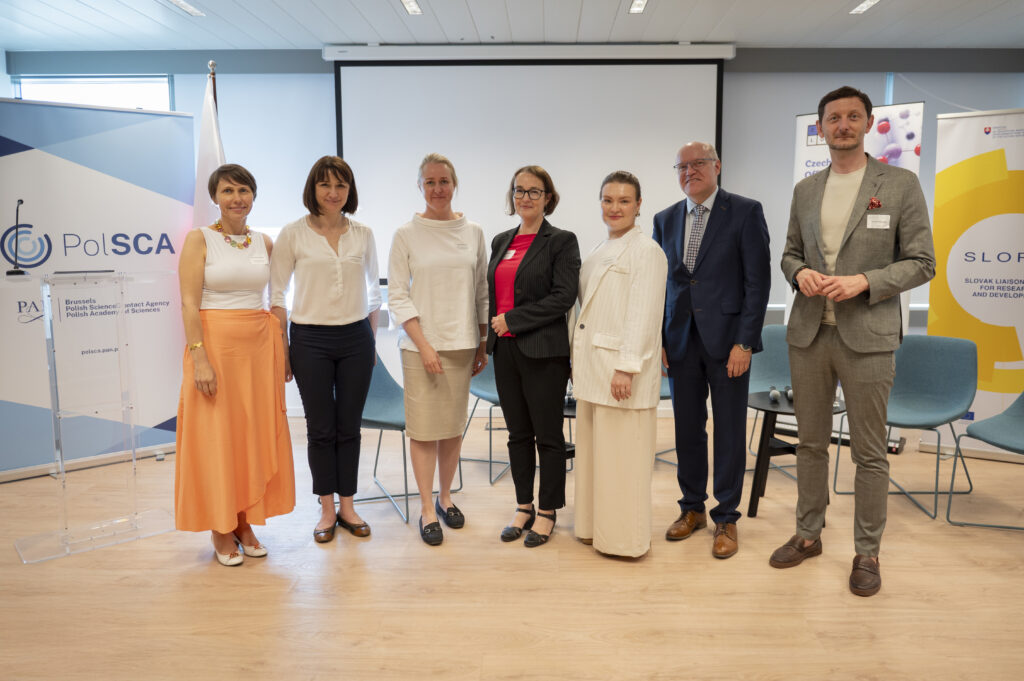
Session IV: Bridging Science, Policy, and Practice – Participatory Dialogue
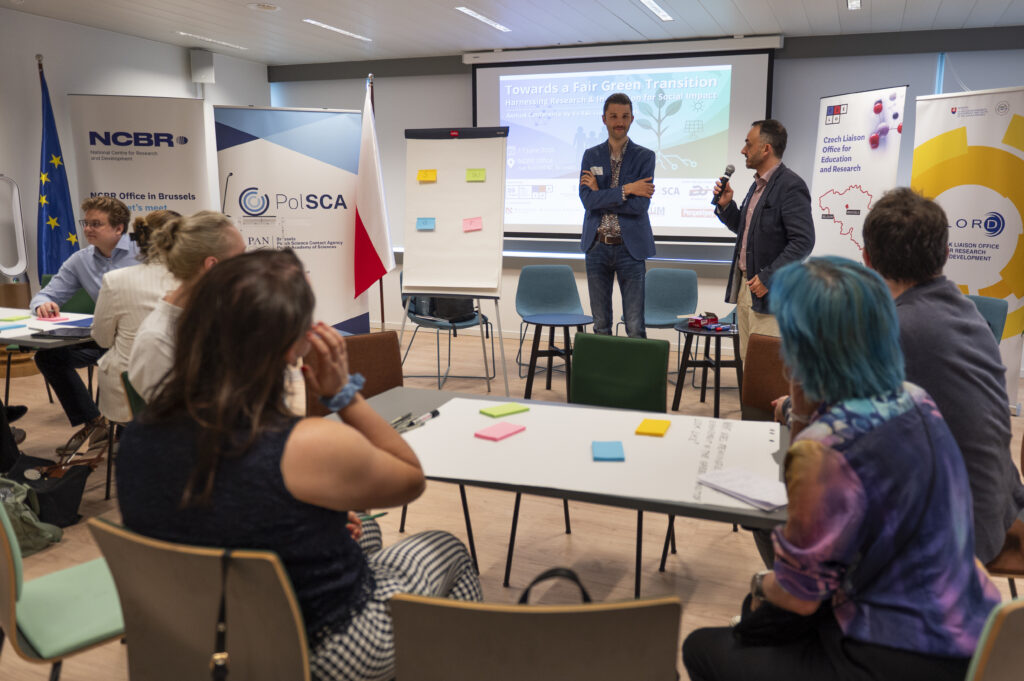
Hosted by the European Commission’s Joint Research Centre (JRC), this session included a presentation of key takeaways from the TSI project on evidence-based policymaking and a participatory exercise on green and just transition.
Speakers: – Elias Kock (JRC-Brussels) – Ventseslav Kozarev (JRC-Ispra, Italy)
Highlights: Elias Kock presented conclusions from the recently finished Technical Support Instrument on building capacity for policy-informed policy making. Based on the JRC’s experience, it can be stated that successful evidence-informed policymaking (EIPM) requires coordinated multi-level interventions and the establishment of shared language and trust across communities.
Conclusions & Recommendations
SSH research should stand alongside technological innovation in transition frameworks and green narratives must go beyond the focus on technological innovations but also citizen-focused and value-oriented. European Partnerships within Horizon Europe serve as entry point for many researchers and help build long-term, cross-border research cooperation. The new Social Transitions and Resilience partnership will engage SSH researchers to build resilience, ensure fairness and inclusiveness and foster social cohesion in the light of climate, environmental, technological and demographical changes.
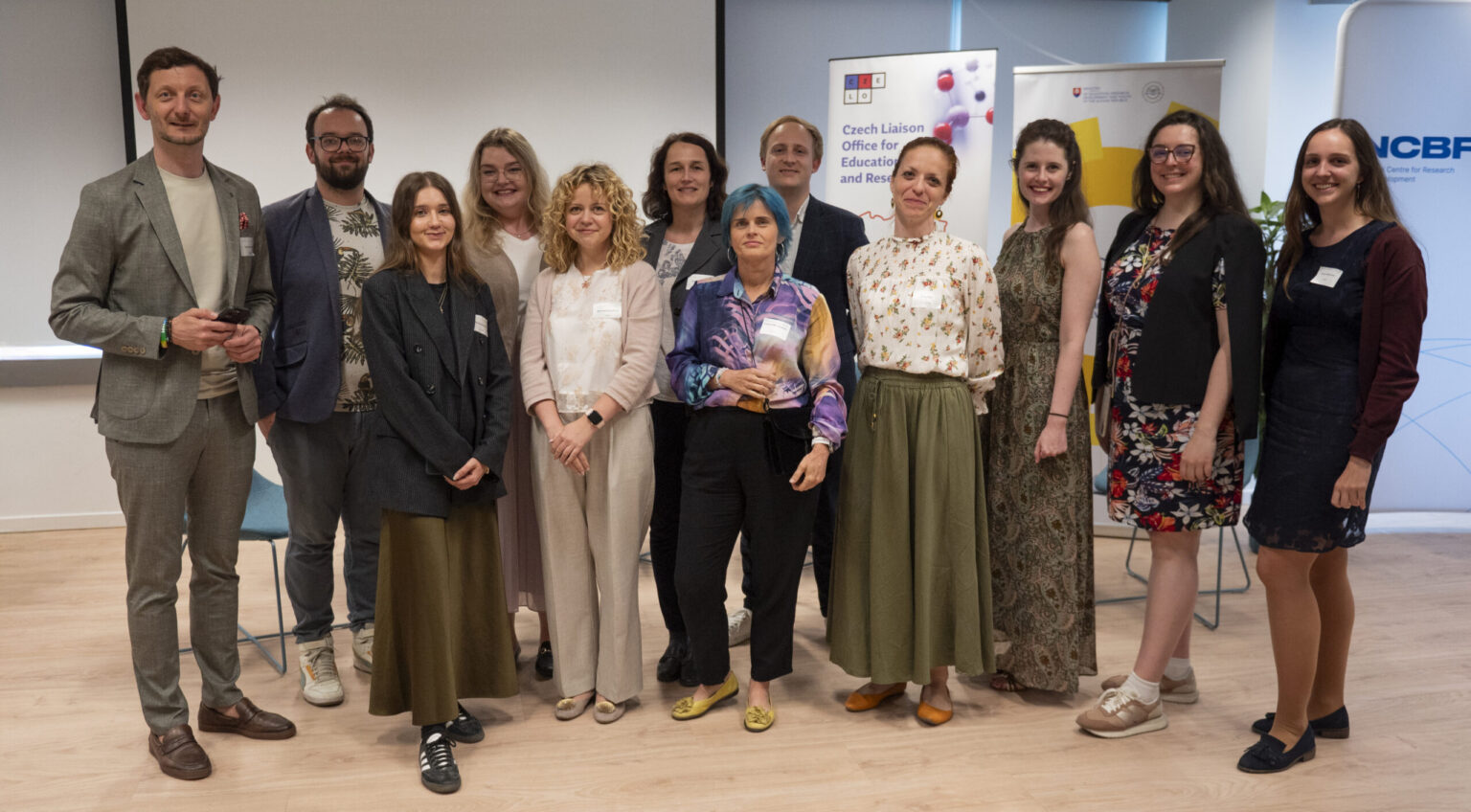
The above summary was prepared by colleagues from the PolSCA office. Full summary of the event is available at this link.
Published 24.7.2025, slord